Tourism Development in Albania: Opportunities, Challenges and the Road Toward a Sustainable Future
Albania has entered a new phase in its tourism development. Once considered a relatively undiscovered destination on the European map, the country has rapidly become one of the most discussed emerging destinations in the Mediterranean. Its combination of Adriatic and Ionian coastlines, mountain landscapes, rivers, lakes, national parks, archaeological sites, traditional villages, cuisine and cultural heritage gives Albania an unusually diverse tourism base for a relatively small country.
Tourism is no longer simply an additional economic activity for Albania. It has become an important component of regional development, employment, investment and international visibility. Recent statistics illustrate the scale of the transformation. In June 2026 alone, 2,081,649 Albanian and foreign citizens entered Albania, an increase of 0.9% compared with June 2025. At the same time, tourism statistics show that accommodation activity is expanding beyond the traditional coastal areas, with non-resident visitors increasingly choosing non-coastal destinations.
However, rapid growth creates an important question: What kind of tourism does Albania want to develop?
The future success of Albanian tourism should not be measured only by the number of visitors crossing the border. The more important indicators are how long visitors stay, how much they spend locally, how widely tourism benefits different regions and communities, how many local businesses participate in the tourism economy, and whether Albania can protect the natural and cultural resources that attract visitors in the first place.
The next stage of tourism development therefore needs to move from simply attracting more tourists toward creating a higher-value, diversified, sustainable and geographically balanced tourism industry.
Albania’s Tourism Transformation
The development of tourism in Albania has been remarkably rapid. For decades, Albania remained relatively isolated from international tourism markets. Its coastline, mountains and cultural heritage were not integrated into the international tourism economy on anything close to the scale seen in neighboring Greece, Montenegro, Croatia or Italy.
That situation began changing substantially after the 2000s.
Improved roads, greater international connectivity, increased private investment, expanding accommodation capacity and the growth of digital travel platforms gradually made Albania easier to discover and visit. International travelers began searching for destinations offering attractive landscapes, authentic experiences and comparatively competitive prices.
The World Bank has highlighted Albania’s relative newness as a destination as one of its competitive advantages, together with its natural environment and cultural resources.
This “new destination” factor has been extremely important. Travelers increasingly look beyond traditional Mediterranean destinations. They want places where they can combine beaches with mountains, food with culture, adventure with relaxation and nature with local experiences.
Albania can offer all of these within relatively short distances.
A traveler can spend the morning on the coast and, within a few hours, reach a mountain village. A visitor can combine a beach holiday with a historical city, a national park, a river excursion or a traditional food experience. This geographical diversity is one of Albania’s strongest tourism assets.
But the country must be careful not to assume that natural beauty alone guarantees long-term tourism success.
Natural attractions bring visitors initially. Quality, infrastructure, services, experiences and reputation determine whether they return and whether they recommend the destination to others.
From Beach Tourism to Four-Season Tourism
One of the biggest challenges facing Albania is seasonality.
The Albanian coast is extremely attractive during the summer months. Destinations such as Sarandë, Ksamil, Vlorë, Himarë, Durrës and other coastal areas receive large numbers of visitors during the peak season.
This creates substantial economic activity, but it also creates pressure.
During the busiest months, accommodation capacity, roads, beaches, restaurants, water systems, waste management and other infrastructure can experience significant stress. Outside the summer season, however, many businesses experience a sharp decline in demand.
This is one reason why Albania needs to develop tourism products that operate throughout the year.
Mountain tourism is one of the strongest opportunities.
Northern Albania, including the Albanian Alps, offers hiking, trekking, mountain villages, rivers, waterfalls and dramatic landscapes. Areas around Theth, Valbona, Kelmend and the Koman region have significant potential for international adventure and nature tourism.
The development of destinations such as the Shala River and Lake Koman demonstrates how inland and northern destinations can become important tourism products rather than secondary attractions.
The same principle applies to central and southern Albania.
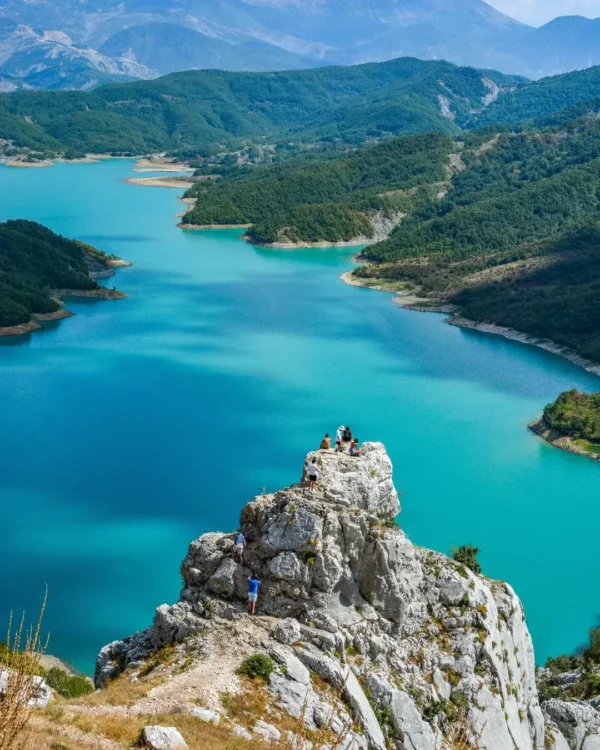
Bovilla Lake, Dajti, Berat, Gjirokastër, Korçë, Përmet, Vjosa, Llogara and numerous villages and protected areas can contribute to a broader tourism calendar.
The objective should be to create a tourism economy in which different regions complement each other.
A visitor arriving for a coastal holiday could be encouraged to spend several additional days exploring inland Albania. A traveler interested in hiking could combine the mountains with cultural destinations. A visitor arriving in spring could experience nature, food and heritage rather than waiting for the summer beach season.
This would increase the average length of stay and distribute tourism expenditure across a larger geographical area.
The World Bank has specifically identified the integration of coastal tourism with nature, food and cultural tourism as an opportunity to increase spending, extend stays, reduce seasonality and relieve pressure on overcrowded destinations.
The Albanian Riviera and Coastal Tourism
The Albanian Riviera will remain one of the country’s most important tourism assets.
Its beaches, cliffs, clear water and dramatic coastal scenery have already established the region as an international tourism destination. However, the future development of the coast should not simply mean building more accommodation and attracting more summer visitors.
The coastal tourism model needs to become more sophisticated.
Albania has the opportunity to develop:
- nautical tourism;
- sailing;
- diving;
- kayaking;
- fishing tourism;
- coastal hiking;
- luxury accommodation;
- wellness tourism;
- culinary tourism;
- cultural excursions;
- boutique hotels;
- marine experiences;
- private boat tours;
- eco-tourism.
This diversification is important because different visitors generate different economic value.
A tourist who stays for five nights, rents a car, takes a boat excursion, eats at local restaurants, visits cultural sites and buys local products contributes substantially more to the local economy than a visitor who spends a short period on a beach and leaves without exploring the surrounding area.
Therefore, tourism policy should focus not simply on visitor volume, but on visitor value.
The World Bank has noted that Albania’s traditional mass-market, beach-based model is associated with strong seasonality, geographic concentration and relatively low value added per tourist.
The challenge is not to eliminate beach tourism. It is to make beach tourism part of a larger tourism ecosystem.
The Mountains: Albania’s Next Major Tourism Frontier
If the coast represents Albania’s established tourism market, the mountains represent one of its greatest opportunities for future development.
The Albanian Alps are particularly important because they combine dramatic landscapes with relatively authentic rural communities and traditional culture.
Hiking and trekking can become major tourism products, but mountain tourism should not be limited to hiking.
Visitors can be attracted through:
Adventure tourism: rafting, kayaking, canyoning, mountain biking and climbing.
Nature tourism: wildlife observation, birdwatching, botanical experiences and protected-area excursions.
Cultural tourism: traditional houses, local history, folklore and village experiences.
Gastronomic tourism: traditional food, local cheese, honey, herbs and regional specialties.
Wellness tourism: retreats, nature-based relaxation and wellness accommodation.
Winter tourism: where geography and climate permit sustainable winter activities.
The key is to create complete destinations rather than isolated attractions.
A mountain visitor needs accommodation, transportation, restaurants, guides, signage, emergency services, digital information and reliable booking systems.
A spectacular landscape is not enough.
Cultural Tourism and Heritage
Albania’s tourism potential is not limited to nature.
The country has a rich cultural and historical heritage shaped by Illyrian, Greek, Roman, Byzantine, Ottoman and modern Albanian history.
Cities such as Berat and Gjirokastër are particularly important, while archaeological and historical destinations throughout the country provide opportunities for cultural tourism.
Cultural tourism can also help reduce the concentration of tourism along the coast.
A visitor staying in Tirana could travel to Krujë. A visitor in Durrës could explore archaeological heritage. A coastal tourist could visit Gjirokastër or Berat. A mountain visitor could experience traditional villages and local customs.
This creates tourism circuits rather than isolated destinations.
Tourism development should therefore connect attractions geographically and thematically.
For example:
Tirana – Krujë – Shkodër – Theth
could form one tourism route.
Another could connect:
Durrës – Berat – Gjirokastër – Vjosa – Përmet
while another could combine:
Vlorë – Llogara – Himarë – Sarandë – Butrint
Such routes encourage visitors to move around the country instead of concentrating in one destination.
Gastronomy as a Tourism Asset
Food is one of Albania’s underused tourism opportunities.
Albanian cuisine is diverse because of the country’s geography and history. Coastal areas have strong Mediterranean influences, while mountain regions have distinctive traditional dishes, dairy products, meats, herbs and preserved foods.
Gastronomy can become a tourism product in its own right.
Visitors increasingly want to understand where their food comes from. They want to visit farms, vineyards, olive producers, cheese producers, bakeries and traditional restaurants.
This creates opportunities for rural communities.
A small village does not necessarily need a large hotel to benefit from tourism. It can benefit from a family restaurant, guesthouse, farm experience, local product shop or guided cultural activity.
That is one of the most important characteristics of sustainable tourism: tourism revenue can reach communities that have historically had fewer economic opportunities.
Rural Tourism and Local Communities
Tourism development should not be concentrated only in major cities and famous coastal destinations.
Rural Albania contains some of the country’s most authentic experiences.
Traditional villages, agricultural landscapes, local cuisine, crafts, family-run guesthouses and cultural traditions can become tourism assets.
However, rural tourism must be developed carefully.
The goal should not be to transform every village into a commercial tourist resort.
Instead, tourism should support the existing identity of communities.
A successful rural tourism model could involve:
- family guesthouses;
- local restaurants;
- agricultural experiences;
- hiking guides;
- traditional craft workshops;
- local food production;
- cultural festivals;
- village tours;
- cycling routes;
- nature excursions.
This approach distributes tourism income and creates incentives for younger generations to remain connected to rural communities.
Infrastructure: The Foundation of Tourism Growth
No tourism strategy can succeed without infrastructure.
Visitors may be attracted by beautiful photographs and social media videos, but their actual experience is determined by roads, airports, ports, public transport, water supply, electricity, telecommunications, waste collection and public spaces.
Albania has made significant progress in connectivity, but infrastructure development needs to continue alongside tourism growth.
Road infrastructure is particularly important for inland tourism.
A destination that is beautiful but difficult to reach will remain a niche destination.
At the same time, infrastructure development must be carefully planned.
Building roads and accommodation without considering environmental capacity can create the very problems that eventually damage tourism.
The World Bank’s integrated urban and tourism development work in Albania has focused on improving urban infrastructure, tourism assets, public spaces, cultural heritage and access to tourist destinations.
The next stage should connect these investments into broader regional tourism strategies.
Waste Management and Environmental Protection
One of the greatest risks to Albania’s tourism future is environmental degradation.
Tourism depends directly on natural resources.
Clean beaches attract visitors.
Clean rivers attract visitors.
Healthy forests attract visitors.
Clear lakes attract visitors.
Beautiful mountains attract visitors.
If these resources are damaged, tourism suffers.
Waste management is therefore not simply an environmental issue. It is an economic and tourism issue.
Poor waste collection, plastic pollution, uncontrolled construction and inadequate wastewater treatment can damage destinations and reduce their attractiveness.
The World Bank has identified ineffective waste management and water treatment as risks to Albania’s coastal environment and tourism economy.
A sustainable tourism strategy must therefore include:
- modern waste collection;
- recycling infrastructure;
- wastewater treatment;
- protection of rivers and lakes;
- coastal conservation;
- protected areas;
- responsible construction;
- environmental monitoring;
- sustainable transport;
- visitor-capacity management.
Tourism development and environmental protection cannot be treated as separate policies.
They are fundamentally connected.
Construction and Urban Development
Tourism investment has the potential to transform Albania’s cities and coastal areas.
It can create hotels, restaurants, entertainment facilities, marinas, residential developments and commercial spaces.
But uncontrolled construction can create long-term problems.
If a destination becomes overbuilt, it can lose the very characteristics that made it attractive.
This is particularly important for coastal areas.
Albania needs urban planning that distinguishes between:
high-density urban tourism zones,
protected natural areas,
traditional villages,
agricultural land,
coastal conservation areas,
and
strategic tourism development zones.
Planning decisions should consider carrying capacity, water availability, wastewater treatment, traffic, waste management, landscape protection and public access to natural resources.
Tourism investment should create value rather than simply increase the number of buildings.
Digital Transformation of Albanian Tourism
Digital technology has completely changed how people choose destinations.
A tourist can discover Albania through TikTok, Instagram, YouTube, Google Maps, travel blogs or online booking platforms without ever seeing a traditional advertisement.
This creates a major opportunity for Albanian businesses.
Small tourism operators can now reach international audiences directly.
A family-run guesthouse in a mountain village can advertise internationally.
A boat operator can accept online bookings.
A restaurant can attract visitors through Google Maps.
A local guide can sell experiences through digital platforms.
A destination can build an international brand through social media.
This means digitalization should become a central component of tourism development.
Tourism businesses should invest in:
- multilingual websites;
- online booking;
- digital payments;
- Google Business profiles;
- professional photography;
- video content;
- social media marketing;
- SEO;
- online reviews;
- customer relationship management;
- multilingual customer service.
Digital infrastructure also needs to improve at destinations.
Visitors increasingly expect reliable mobile connectivity, digital maps, online information and easy access to transportation and booking services.
The Importance of Tourism Data
Tourism development should increasingly become data-driven.
It is not enough to know how many people enter Albania.
Policymakers and tourism businesses should understand:
- where visitors come from;
- where they stay;
- how long they stay;
- how much they spend;
- which attractions they visit;
- what services they purchase;
- what problems they encounter;
- what months they travel;
- what motivates them to choose Albania;
- whether they return.
INSTAT already publishes tourism statistics covering border movements and accommodation activity, including arrivals, departures and overnight stays.
The next step is to use these data more effectively.
Better tourism intelligence could help Albania identify emerging destinations, understand visitor behavior and determine where infrastructure investment produces the greatest economic impact.
Improving the Quality of Tourism Services
More tourists do not automatically mean better tourism.
Service quality matters.
Visitors remember how they were treated.
They remember whether prices were transparent.
They remember whether transportation was reliable.
They remember whether a tour guide was professional.
They remember whether accommodation matched its description.
They remember whether restaurants provided good service.
They remember how businesses responded when something went wrong.
Albania therefore needs continued investment in hospitality training.
Tourism education should include:
- foreign languages;
- customer service;
- digital skills;
- destination management;
- food safety;
- environmental responsibility;
- tour guiding;
- emergency procedures;
- business management.
Professionalism is one of the strongest ways Albania can transition from a low-cost emerging destination toward a higher-value tourism destination.
Human Resources and the Tourism Workforce
Tourism is ultimately a people-based industry.
Hotels, restaurants, travel agencies, guides, transportation companies and attractions all depend on workers.
One of Albania’s challenges is retaining skilled tourism employees.
Seasonal employment can create instability, while talented workers may seek opportunities abroad.
A more mature tourism industry needs to create better career opportunities.
This means:
- professional training;
- competitive salaries;
- career progression;
- year-round employment;
- specialized education;
- language training;
- management development.
Extending the tourism season is particularly important because it can help transform seasonal employment into more stable employment.
Attracting Higher-Value Visitors
Albania should not compete only on price.
Price competitiveness helped establish Albania as an emerging destination, but it cannot be the foundation of a long-term tourism strategy.
Countries become more competitive when they offer unique experiences and high-quality services.
Albania can develop premium tourism around:
- boutique hotels;
- luxury villas;
- private boat experiences;
- gastronomy;
- wine tourism;
- wellness;
- adventure tourism;
- cultural experiences;
- exclusive nature experiences.
The goal should not necessarily be “luxury everywhere.”
Rather, Albania should offer different levels of tourism products for different markets, while ensuring that quality standards are consistently high.
The Role of the Albanian Diaspora
The Albanian diaspora can play an important role in tourism development.
Diaspora communities are already familiar with Albania and can act as informal ambassadors.
They can bring friends, colleagues and business partners to the country.
They can invest in accommodation, restaurants, transportation, technology and tourism services.
However, diaspora tourism should not be viewed only as people returning to visit relatives.
It can become a bridge between Albania and international tourism markets.
Members of the diaspora living in Germany, Italy, Switzerland, the United Kingdom, the United States and other countries can help promote Albania through their personal and professional networks.
Regional Tourism Cooperation
Albania should also think beyond its borders.
The Balkans are interconnected.
Visitors who travel to Montenegro, Kosovo, North Macedonia or Greece may also be potential visitors to Albania.
This creates opportunities for multi-country itineraries.
For example, international visitors could combine:
Montenegro + Northern Albania
or
Kosovo + Albania
or
North Macedonia + Albania
or
Greece + Southern Albania.
Such cooperation could make the region more competitive internationally.
Instead of seeing neighboring destinations only as competitors, Albania can also view them as partners in creating larger Balkan travel experiences.
Tourism as a Driver of Regional Development
One of tourism’s greatest advantages is its ability to distribute economic activity geographically.
Traditional economic development often concentrates around major cities.
Tourism can work differently.
A mountain village can receive international visitors.
A rural producer can sell food to hotels.
A local driver can provide transportation.
A young person can work as a guide.
A family can operate a guesthouse.
A craft producer can sell products.
A restaurant can specialize in regional cuisine.
This creates a network of economic activity.
The World Bank describes tourism as an industry that connects international demand with local suppliers across hospitality, transport, food, culture and retail, creating opportunities for small businesses and communities.
This is particularly important for Albania because tourism can help reduce regional economic disparities.
The Future of Shala River and Lake Koman
Northern Albania illustrates the potential of experience-based tourism.
Lake Koman and the Shala River have become recognizable attractions because they offer something different from traditional beach tourism.
Visitors are not simply buying transportation.
They are buying an experience: a boat journey through dramatic landscapes, clear water, mountain scenery and access to relatively remote natural environments.
This model can be replicated elsewhere.
The lesson is important:
Albania does not need to invent artificial attractions when it already possesses extraordinary natural ones.
The priority should be improving access, safety, interpretation, environmental protection and service quality around existing attractions.
Tourism Marketing: Selling Experiences, Not Just Places
Albania’s international tourism marketing should evolve.
Simply saying “Visit Albania” is not enough.
Modern tourism marketing should communicate specific experiences.
For example:
Hike the Albanian Alps.
Explore the canyons of the north.
Swim in the Ionian Sea.
Discover UNESCO heritage.
Taste traditional Albanian cuisine.
Explore Lake Koman and the Shala River.
Experience the Vjosa River.
Discover Albania’s villages.
These messages create stronger emotional associations.
The country’s tourism brand should communicate diversity: Albania as a place where sea, mountains, culture, food and adventure exist within one relatively compact destination.
Managing Overtourism
Tourism success can eventually create its own problems.
If too many visitors concentrate in a small number of destinations during a short period, the result can be congestion, rising prices, environmental damage and reduced visitor satisfaction.
Albania should learn from other Mediterranean destinations before reaching that point.
Destination management should therefore include visitor-capacity monitoring.
If a particular beach, archaeological site, national park or river becomes overcrowded, authorities and businesses should have mechanisms for managing visitor flows.
This could include:
- timed entry;
- booking systems;
- parking management;
- visitor caps where scientifically justified;
- alternative destinations;
- improved public transportation;
- off-season promotion.
The objective is not to prevent tourism.
It is to prevent tourism from destroying the quality of the destination.
Climate Change and Tourism
Climate change will increasingly influence tourism.
Extreme heat, drought, wildfires, flooding, water scarcity and coastal pressures can affect tourism infrastructure and visitor behavior.
Albania needs to incorporate climate resilience into tourism planning.
New hotels, roads and public spaces should be designed with future climate conditions in mind.
Water management will become increasingly important, especially in coastal destinations where summer demand is highest.
The World Bank has already supported climate-informed urban and tourism development in southern Albania, including efforts to improve resilience and reduce greenhouse-gas emissions.
Sustainable tourism should therefore not be considered simply a marketing concept.
It is becoming an economic necessity.
The Role of Government
Government has an essential role, but it cannot build the tourism industry alone.
The public sector should provide:
- strategic planning;
- infrastructure;
- environmental regulation;
- heritage protection;
- destination management;
- reliable statistics;
- transparent investment rules;
- safety standards;
- education and training.
The private sector should provide:
- accommodation;
- restaurants;
- tours;
- transportation;
- attractions;
- digital services;
- investment;
- innovation.
Local communities should participate in decisions that affect their destinations.
Tourism works best when these three groups—government, business and communities—operate within a coordinated framework.
The Role of Local Businesses
Small and medium-sized enterprises are particularly important for Albania.
Large hotels can attract investment, but thousands of small businesses create the everyday tourism experience.
The local restaurant.
The family guesthouse.
The taxi driver.
The boat operator.
The hiking guide.
The photographer.
The souvenir shop.
The farm.
The local producer.
The travel agency.
The digital marketing agency.
Together, these businesses form the tourism ecosystem.
Tourism policy should therefore make it easier for small businesses to formalize, access financing, improve digital skills and participate in international markets.
What Albania Should Aim to Become
Albania should not try to become another Greece.
It should not try to become another Croatia.
It should not try to become another Montenegro.
It should become the best version of Albania.
Its competitive advantage lies in authenticity, diversity and geographical proximity.
The country has enough coastline to compete in Mediterranean tourism.
It has mountains capable of attracting adventure travelers.
It has historic cities.
It has traditional villages.
It has unique rivers and lakes.
It has a distinctive cuisine.
It has cultural heritage.
And it has the advantage of still being relatively new to many international travelers.
The World Bank has argued that Albania’s relative newness and natural and cultural resources create an opportunity to develop a more diversified and sustainable tourism model.
The challenge is to avoid destroying the qualities that created the opportunity.
A Vision for Albania’s Tourism Future
Imagine Albania’s tourism industry ten years from now.
A visitor arrives in Tirana and can easily book a multi-day itinerary connecting the capital with historical cities, mountains, rivers and the coast.
Digital platforms provide accurate information in multiple languages.
Roads and public transportation connect major tourism regions.
Mountain villages have high-quality guesthouses and local restaurants.
Tourists can hike in protected areas with professional guides.
Lake Koman operates as a well-managed nature tourism destination.
The Shala River is protected from uncontrolled development while still providing high-quality visitor experiences.
Coastal destinations have modern wastewater and waste-management systems.
Nautical tourism has developed through marinas and professional boat operators.
Cultural heritage sites are properly maintained and integrated into tourism routes.
Local farmers supply hotels and restaurants.
Young Albanians find professional careers in tourism rather than seeing tourism as temporary seasonal work.
Visitors stay longer.
They spend more.
They explore more regions.
And the economic benefits reach more communities.
That should be the ultimate objective.
Conclusion
Tourism development in Albania is no longer a question of whether the country has potential. The potential has already been demonstrated.
Visitor numbers, accommodation activity, investment and international attention all show that Albania has become an important tourism destination. INSTAT’s tourism data continue to document substantial international movement and growing accommodation activity, including increasing demand in non-coastal areas.
The real question is what happens next.
Albania has a choice.
It can pursue tourism growth primarily through increasing visitor numbers and construction, concentrating demand in a few coastal destinations during the summer.
Or it can build a more sophisticated tourism economy based on quality, diversification, sustainability, local participation and year-round experiences.
The second path is more difficult, but it offers much greater long-term value.
Albania should develop its coast without sacrificing its beaches, its mountains without destroying its landscapes, its cities without losing their identity, and its tourism industry without marginalizing the communities that make the country attractive.
The future should not be measured simply by how many tourists visit Albania.
It should be measured by how much value tourism creates, how many people benefit, how many regions participate, how long visitors stay, how satisfied they are, and whether Albania’s natural and cultural heritage remains stronger after decades of tourism development than it was before.
Tourism can become one of Albania’s strongest engines of economic development. It can create employment, encourage entrepreneurship, bring investment to rural regions, strengthen infrastructure, promote Albanian culture internationally and create new opportunities for younger generations.
But sustainable tourism requires discipline.
The country must protect its natural resources, improve infrastructure, strengthen service quality, invest in human capital, diversify its tourism products, manage construction, improve waste and water systems, use data intelligently and embrace digital transformation.
The foundation is already there.
The mountains are there.
The rivers are there.
The lakes are there.
The beaches are there.
The history is there.
The food is there.
The people are there.
What Albania needs now is a tourism model capable of bringing all these assets together.
**The next chapter of Albanian tourism should not be about discovering Albania. The world has already started doing that. The next chapter should be about developing Albania intelligently—so that tourism becomes not only bigger, but better, more sustainable and more valuable for the country and its people.**